
Unbeknownst to you, MAHARANA PRATAP and GOGUNDA are mentioned in the same breath as RAJPUTANA culture. You’ll be going off-target if you believe forts were supposed to be raised in densely populated areas. No indeed! Located in the village of Gogunda, the beautiful, age-old, century-old fort of Maharana Pratap has been restored into a sanctuary of palace experience.
We were in Udaipur and witnessed one such edifice where the king was grandly coronated; it is the Gogunda Palace, welcoming you by opening its “hathi pol” gates! The whole fortress and abutting areas were screaming RAJPUT “gharana” and art. But the sweet smell of sugarcane syrup permeated the air as we entered the interior of the village. Our driver informed us that jaggery making is a prominent affair in his village. So, we saw how most of the farmers there were cultivating sugarcane and owned a jaggery-making unit.
Earliest pointer that shrieked the culture of the village. We forge ahead deep into the forests of Aravalli, hearing that it’s one of the oldest remnants of the king’s concealment for his ammunition. We were appalled! Was it still there? We go on a safari drive and solemnly arrive at the place where the king used to hide his projectiles. An enfolded cave lay before us! We started to inspect, and true to God, we saw a graphical glimpse into how various weapons used in warfare were camouflaged there. It’s known to be the MYRAH KI GUFAH!
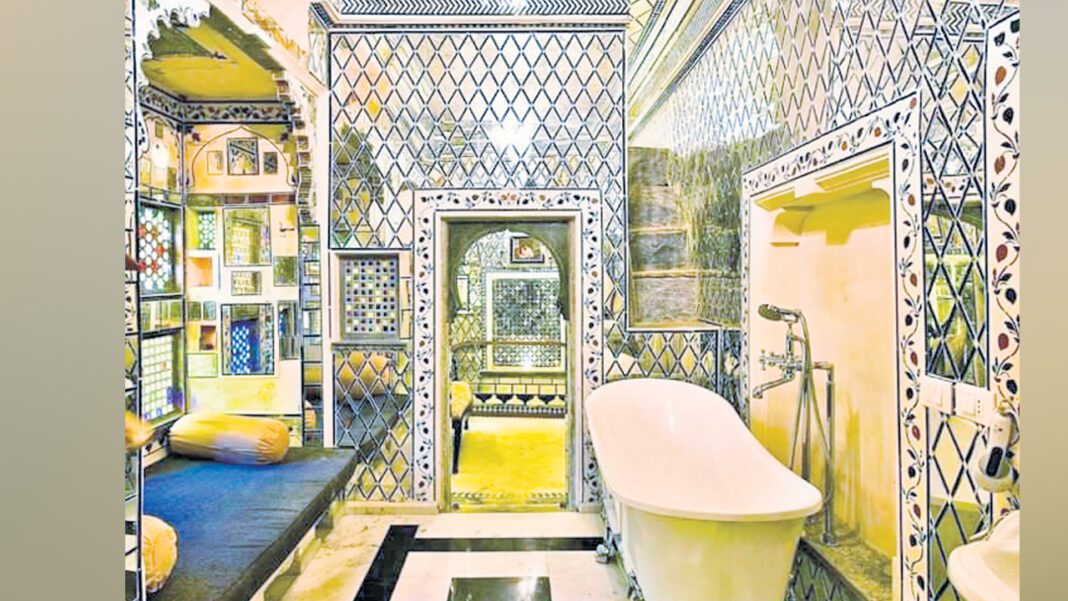
Nature was in full focus; the deforestation rampage has still not reached the respective area of the forest we were scouting, but the sacred grove that’s been protected by the local community was a sight to behold. The canopy was limpid, and the gigantic trunks of the trees were recognisable. The next pointer was yelling all about a combat between the kings. And, when we spoke of restoration in the beginning of our travelogue, very intelligently, what we saw was how every original detail was actually put back with the old-world charm — be it the traditional handi lamps or the palatial bathrooms at the fortress.
To the letter, it was squealing Rajasthani culture without fail. The ternary pointer made us feel slightly demented — how is stone being carved in the open? We saw panels being made of stone and relief work being combined with trellis work. And the same stone was untouched at the royal residence. Special gogunda stone bathrooms completed our regal experience!
Coming to the quadrant of being the guest of Raj Tilak Sthal of Maharana Pratap, again, we were enchanted. Turned out to be unimaginably significant because the monarch paid tribute there! The headliner is yet to come, since you wouldn’t want to miss the Raj Mahal in the stately home. Star Turn was the wooden elevator that took us to the opulence and grandeur of Kunwar’s existing territory. So much grandeur, the hint of masculine overtones — we were awed. Standing where the Maharana of Mewar used to doze was nothing less than feeling that top act. From every angle, we were glancing at the Sisodia dynasty from the fifteenth century, and mind you, it was unspoiled!