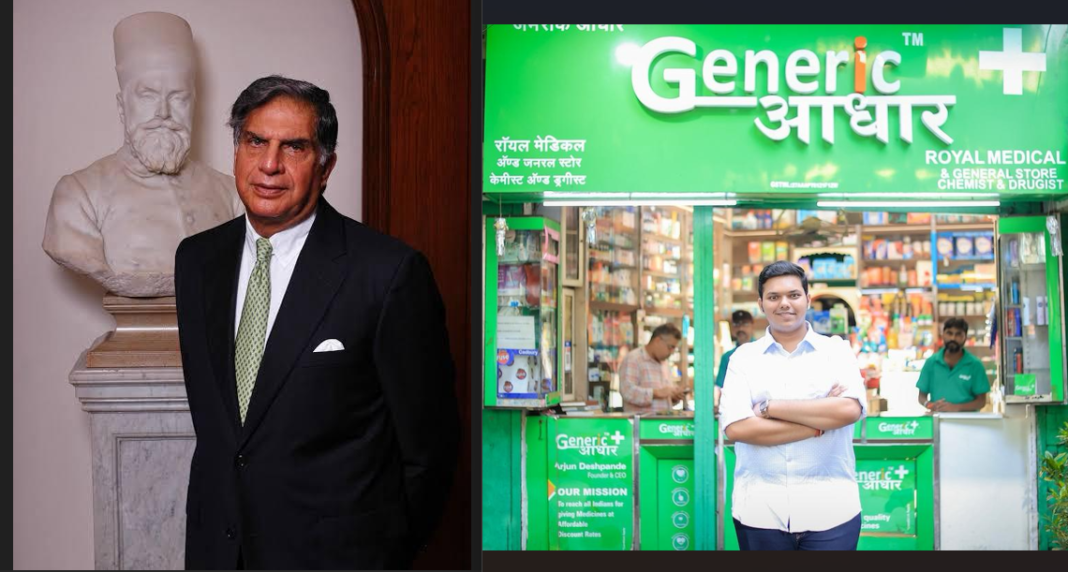

From seeing a family’s heartbreaking struggle to pay for life-saving medications to creating a pharmaceutical empire that is revolutionising the industry, Arjun Deshpande’s journey is one of ingenuity, passion and purpose. Come along as we explore the history of Generic Aadhaar!
You started working to address a basic problem in India’s pharmaceutical industry when you were just sixteen years old. What was the most difficult thing you had to do as a teenager?
Disrupting the conventional pharmaceutical distribution system, which relied heavily on middlemen, was the most difficult task. When I was sixteen, I noticed a serious problem with India’s pharmaceutical sector: the exorbitant cost of medications because of several intermediaries. Knowing that this needed to change, I went to 200–300 pharmacies in an attempt to persuade them to use my direct-to-consumer business strategy. Most were doubtful at first. However, I was not taken seriously. “How can a 16-year-old change an industry that has worked this way for decades?” They found it incomprehensible that a teenager would question a long-standing system. I struggled for two to three months before I was able to persuade one pharmacy. As a result of that success, more retailers began to support the idea over time. Breaking the retailers’ deeply rooted attitude was the most difficult task. However, perseverance, conviction and a distinct vision transformed suspicion into trust. And that “yes” was only the first step.
Have you encountered opposition from bigger pharmaceutical firms? If yes, how have you handled it?
Indeed, large corporations that rely on aggressive marketing, medical referrals and branding have historically controlled the pharmaceutical sector. Established businesses resisted when I proposed the Generic Aadhaar business model, which cuts out middlemen to lower the cost of medications. I addressed this, though, by emphasising openness, quality control and public knowledge. My strategy was to inform patients and customers about the effectiveness and affordability of generic medications. It increased public trust and expanded access to affordable healthcare.
Have you had to put forth more effort to build credibility, or has your young allowed you to disrupt the industry?
In a field as well-established as pharmaceuticals, being young presented both opportunities and difficulties. On the one hand, it gave me the freedom to think creatively and unconventionally without being constrained by social standards. However, at first, credibility was a barrier since many people doubted that someone so young could have a significant influence. I created an ecosystem with it that allows consumers to obtain the same premium medications at reasonable costs from the same producers who supply global corporations. By cutting out needless intermediaries and lowering exorbitant prices, I guarantee that important medications will always be accessible to the average person.
Do you view yourself as spearheading a new social entrepreneurship movement in light of India’s employment crisis?
By producing micro-entrepreneurs, the concept not only lowers the cost of medications but also gives people more control. One of the most rewarding parts of my journey has been this! Allowing people to operate their own pharmacy with no financial outlay has significantly improved their lives, especially in light of India’s employment issues. I’m most surprised by the initiative’s overwhelming impact, which includes witnessing entire towns gain access to inexpensive healthcare, young entrepreneurs become financially independent and families improve their standard of living. This strengthens my conviction that companies can contribute to society while still being sustainable.
What measures have you done to guarantee that people trust your medications?
Despite scientific proof that generic medications are just as effective as branded ones, many continue to be skeptical because of ignorance and false beliefs about their quality. I have addressed these issues in a number of ways. Through awareness efforts, I also concentrate on educating consumers, pointing them that generic medications are far less expensive than branded ones while still containing the same active components.
Have you discussed healthcare changes with legislators?
Affordable healthcare is a crucial topic that is frequently debated in policy circles, but when efforts are put into practice, genuine change occurs. Businesses like Generic Aadhaar, in my opinion, have the power to bring about systemic change in areas where governments struggle to implement policies. Our goal is in line with Prime Minister Narendra Modi Ji’s ambition to make medications accessible and inexpensive for all citizens, including those living in remote areas. Recognising the need for creative solutions that close the gap between affordable and high-quality healthcare, government agencies have taken the initiative to promote this cause. Droupadi Murmu madam, the President of India, commended Generic Aadhaar for its substantial role in ensuring that life-saving medications are accessible to the general public at notably reduced costs. She recognised our efforts to provide millions of families with access to necessary medications without sacrificing quality and to lessen the financial burden of healthcare. We are demonstrating that access to affordable healthcare is not only a dream but a reality that we are constructing daily, changing lives all throughout the nation, by collaborating with the government and utilising innovative business models.
What is the most important thing you’ve learned from Ratan Tata, your mentor?
Among the most important things I’ve learnt from Ratan Tata sir is that business is about more than simply making money; it’s about actually changing the world. His dedication to moral leadership and creativity has served as an inspiration to me. My first TEDx talk, which focused on my goal of lowering the cost of medications by cutting out intermediaries, went viral, marking a significant turning point in my journey with Generic Aadhaar. When Ratan Tata sir saw it, he was moved by the reason I was working. My life changed when I got a call shortly after that saying he wanted to meet me. More significantly, his mentorship influenced my leadership style, but his faith in my mission also gave me confidence. He has always dreamed of a healthcare system in which the exorbitant cost of necessary medications does not prevent anyone from accessing them. Under his direction, I am using Generic Aadhaar to make this goal a reality and provide everyone with access to reasonably priced healthcare. I’m determined to uphold his legacy of moral business practices and social impact as I develop further, making sure that high-quality healthcare reaches the people who need it most.
You saw an old man who was having trouble paying for cancer treatment, so you began Generic Aadhaar. Do you ever think back on that moment now that you have thousands of consumers?
That was a pivotal event in my life. I came to the realisation that affordability should not be a privilege but rather a right after witnessing someone who was having difficulty paying for life-saving medications. Since then, my goals have expanded to include changing healthcare accessible more broadly as well as creating a profitable company. I feel even more obligated to advance now that it is growing quickly and enabling micro-entrepreneurs. I now see this as a movement to transform healthcare in India and abroad, not just a company.
Do you anticipate growing internationally as you scale further, especially in nations like the U.S. where the cost of medications is similarly high?
Indeed, growing internationally is undoubtedly a goal of ours. The high cost of medications is a problem in many nations, including the US, and my strategy of lowering the cost of high-quality generic medications can have a big worldwide impact. We are now working to fortify our position in India, but I envision it helping to lower the cost of medications globally in the future.